In his post he quotes from documents that explored the role of doctors in these murders:
The beginnings at first were merely a subtle shift in emphasis in the basic attitude of the physicians. It started with the attitude, basic in the euthanasia movement that there is such a thing as a life not worthy to be lived. This attitude in its early stages concerned itself merely with the severely and chronically sick. Gradually the sphere of those to be included in this category was enlarged to encompass the socially unproductive, the ideologically unwanted, the racially unwanted and finally all non-Germans.
Dr. Brian Skotko’s 2005 survey of parents and anecdotes from many people I have met point to medical professionals moving in this direction of ‘life unworthy of life’ here.
So let us not be subtle in our response: let the children live; all of them.
I was blown away over lunch today by a presentation from Faith Comes By Hearing and the incredible work they are doing to bring the Bible in audio format to every language in the world. They have done more than 700 audio translations!
Even more exciting, they recognized that one of the largest unreached people groups in the world, the deaf, also needed access to the Bible.
So just a few months ago they launched a free app in American Sign Language. Even as they complete this project, they are starting work on additional sign languages around the world. Here’s an introduction to the app:
Pastor Ryan Franchuk of Christ Fellowship Church invited me to speak this Sunday, July 14 at 10:30 a.m. in Baltic, South Dakota. I’d love to see my South Dakota friends and family!
The topic won’t surprise you: God’s Good Design in Disability. We’ll have a meal together and a time for questions afterward.
I’m grateful for the opportunity, and would also appreciate your prayers as I bring God’s word on this topic to these friends.
Emancipation: freeing someone from the control of another; especially a parent’s relinquishing authority and control over a minor child.
Dear Paul,
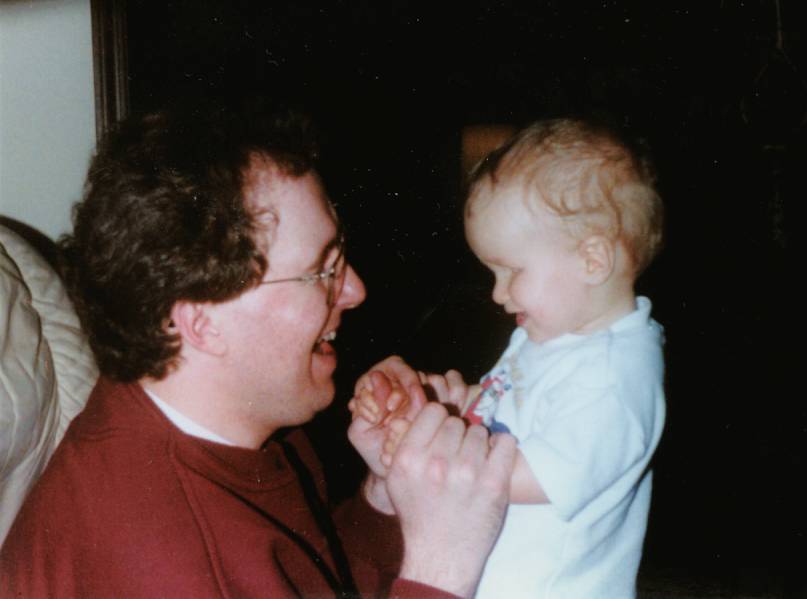
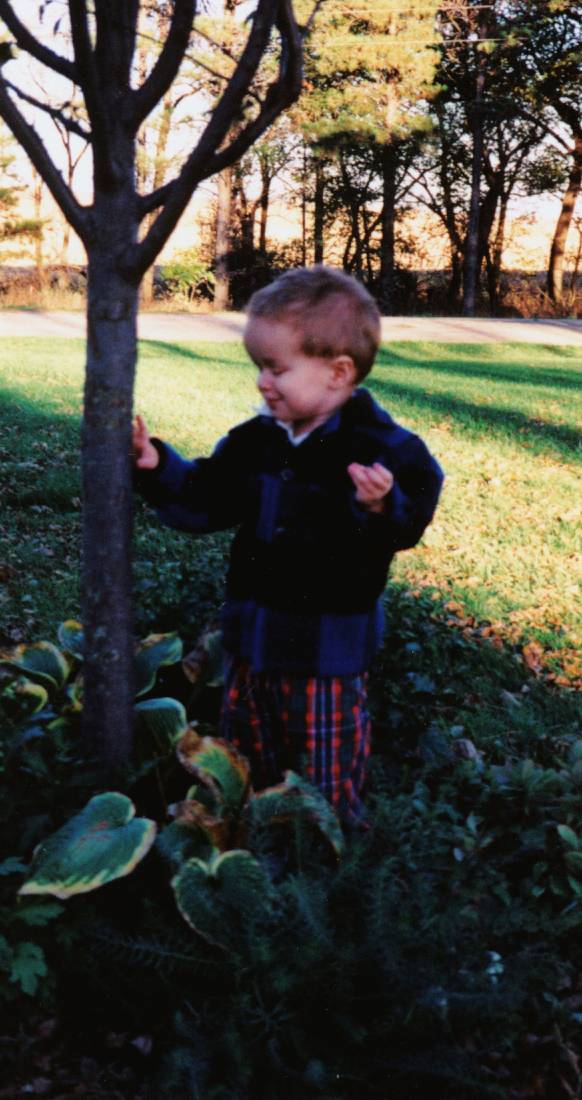
Eighteen years ago today, a boy was born. More specifically, YOU were born.
And my journey from slavery to freedom began.
The day of your birth was not a happy one for me; disability was not part of my plan. I’m ashamed at the memory of my thoughts from that day.
But here you were: blind, helpless, needy, entirely dependent on parents who didn’t understand your world.
Foolishly, I did not trust the promises of God, which I had been taught since I was a child. I went my own way.
Even this was part of God’s plan.
At the right moment, God breathed life into me:
But God, being rich in mercy, because of the great love with which he loved us, even when we were dead in our trespasses, made us alive together with Christ—by grace you have been saved—and raised us up with him and seated us with him in the heavenly places in Christ Jesus, so that in the coming ages he might show the immeasurable riches of his grace in kindness toward us in Christ Jesus. (Ephesians 2:4-7, ESV)
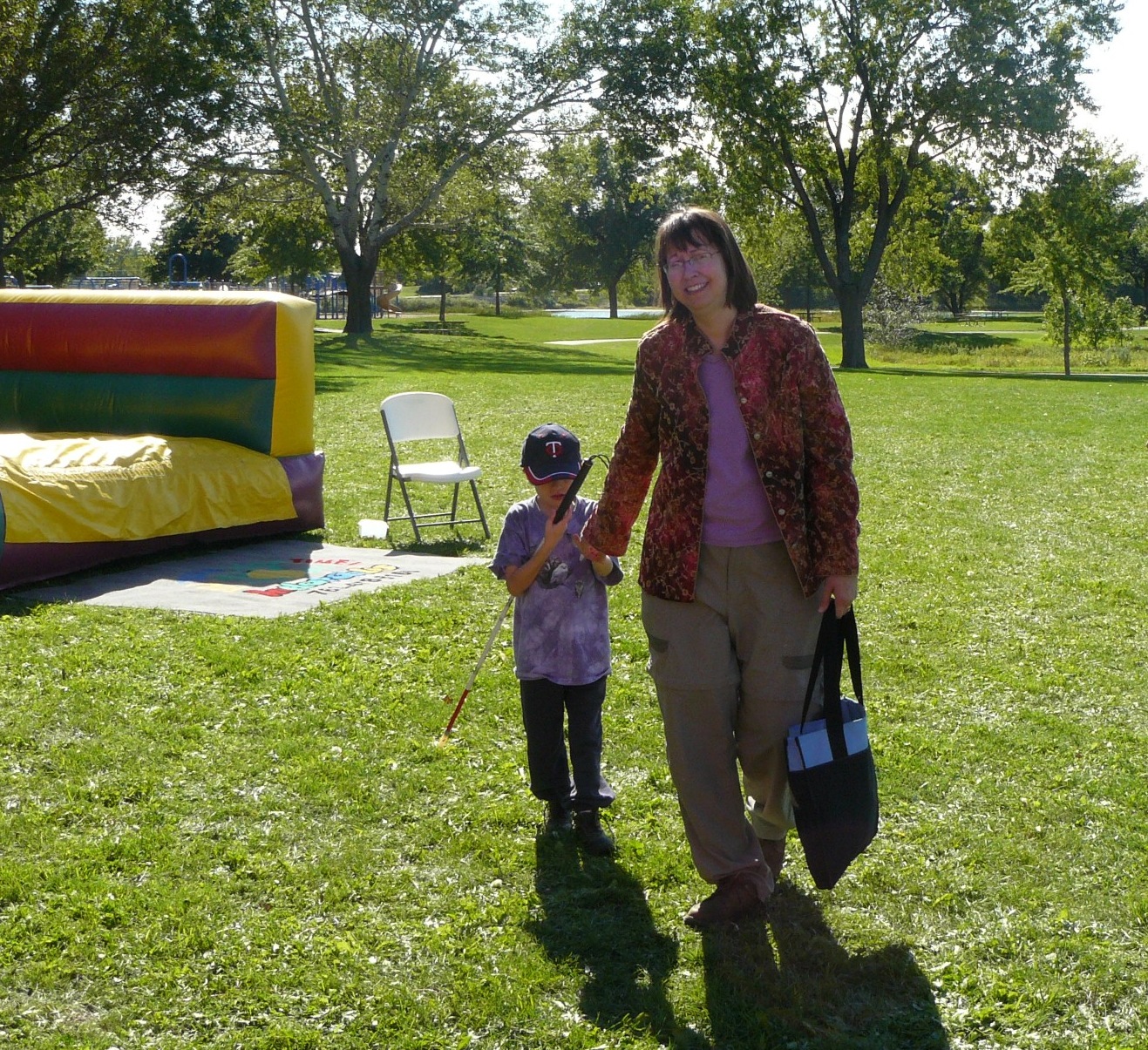
My son, you are still blind, helpless, needy, entirely dependent on your parents who don’t understand your world. Over time we added autism, cognitive impairments, epilepsy and more. It has not been easy for any of us.
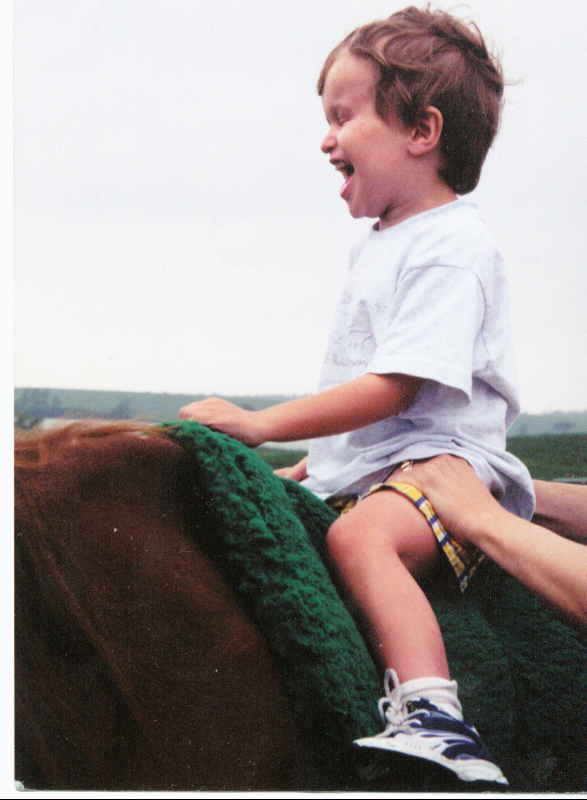
But God understands your world. He made you for a great purpose, or 10,000 purposes. God has kindly let me see a few of them.
And God is happy to provide help every day, for you and for me. That is exactly what he has done for the past 6,575 days of your life. I expect God will do it again tomorrow. He promised he would.
I am your guardian, responsible for all decisions concerning your life and health. You don’t seem to mind. From that standpoint, today is like every other day of your life.
But in a tangible way you are my champion, the very means through whom God called me to himself. Maybe someday Jesus will tell us the stories of how he used you to change people all over the world. Or maybe that won’t be important any longer because we’ll be so happy to be with him. Either way, we’ll be happy!
So, today you may not be emancipated as other 18-year-old young men will be.
But you live a mostly contented life. You do not worry about tomorrow. You do not hold grudges from past wrongs. You expect your needs will be met today.
You are free in ways most people can only dream about, in ways I long for. Your happy confidence in your parents isn’t warranted, but it is a great picture of how I should trust our Father-God. I’m glad for that picture. And I’m glad to have you.
Happy birthday, son! Daddy loves you very, very much!
Now the Lord is the Spirit, and where the Spirit of the Lord is, there is freedom. And we all, with unveiled face, beholding the glory of the Lord, are being transformed into the same image from one degree of glory to another. For this comes from the Lord who is the Spirit. (2 Corinthians 3:17-18, ESV)
Last Saturday Pastor Bud was preaching for Pastor Jason. He was helping us see the importance and beauty of worship, including families worshiping together in church.
Paul, however, was determined to have his say as well. So Dianne moved away from where we were sitting to lessen the disturbance he was making. That isn’t too unusual for us.
(I must pause here and give a shout-out to my church and their training of their volunteers. We don’t normally attend on Saturdays, so we aren’t as well known to the regular Saturday attenders. A young woman who was serving as a greeter/usher approached me after Dianne made the shift to let me know that Paul was very welcome where we were sitting and not to worry about it. That felt good!)
But Paul was unusually ‘gifted’ in volume this evening! As Paul’s volume rose Dianne felt the need for another solution.
So she put him in a closet.
Before you call child welfare on us, this is a large coat closet at the back of the commons area that, being summer, wasn’t being used. Dianne could sit where she could see Paul and where she could hear the sermon, but Paul’s vocalizing was significantly muted. He was perfectly safe and she was MUCH more comfortable.
As she exited the closet, Pastor Bud was just getting to his point about restless children sometimes needing to be taken from the sanctuary, and he allowed that it isn’t always clear when this is the best thing to do. Dianne thought to herself, nor is it clear when it is best to put the boy in the closet!
She tells the story much better than I can write it! I was laughing so hard when she told me after the service that tears came to my eyes. We caught up with Pastor Bud and his wife, Lisa, after the service and told them the story. They enjoyed it as well.
You might be thinking, was this really the best solution? There are usually many different ways to handle a situation like that; there were other options. But in the moment that wasn’t too bad!
I appreciate that God has created the kind of culture at Bethlehem where behavioral expectations for children can be articulated and parents can be both exhorted and encouraged in their roles. Yet when one of God’s unusually-created human beings shows up, we have the grace (and the space) to welcome them and to let parents do some creative things outside of the norm, sometimes on the fly.
Not perfectly, of course. But on this particular evening we went home a happy family, well served by our Pastor Bud and by our church, and grateful to God for his unusual help with a very noisy boy.
Barb Dittrich of Snappin’ Ministries (Special Needs Parents Network), my friend and a fellow parent in this life of disability, asked me to contribute to their devotional blog in honor of Father’s Day. Below is an excerpt. You can read the entire post here.
But exhort one another every day, as long as it is called “today,” that none of you may be hardened by the deceitfulness of sin. (Hebrews 3:13, ESV)
If you’re a man reading this blog, you’re probably a dad of a child with a disability. And if you’re like most of us dads, you didn’t choose this life. I’m guessing it is harder than anything you’ve ever experienced before.
You’re not alone.
I remember feeling alone, especially in those early months. Nobody understood what it was really like, it seemed. A social worker invited us to a parent meeting and that was even worse – they understood, but they were all so sad or angry or resigned to life. We didn’t go back to that parent group.
Those were dark days, made even darker when I realized the doctors and specialists and educators thought dads were mostly there as a checkbook and an insurance card.
And Father’s Day? All those happy images of dads playing ball with their sons or fishing or just enjoying each other’s company certainly didn’t apply to my situation.
But God gave me a gift that I wasn’t asking for. His name was Karl.
Does God really use the frustrating little things in our lives for our good? Is repeating the same songs or verses to a child with severe disabilities really worth it?
And are those two questions related?
The team at Desiring God has developed a daily devotional created from the vast library of resources from Pastor John. You can access it via apps for Apple and Android or through a website called Solid Joys.
What follows is the devotional for today, May 25, entitled God’s Design in Detours. Please be tolerant of the old language signifying cognitive disabilities that was used; it was meant simply to describe the child’s circumstances and not diminish her worth as a human being:
And whatever you do, in word or deed, do everything in the name of the Lord Jesus, giving thanks to God the Father through him. (Colossians 3:17)
Have you ever wondered what God is doing while you are looking in the wrong place for something you lost and needed very badly? He knows exactly where it is, and he is letting you look in the wrong place.
I once needed a quote for a new edition of my book Desiring God. I knew I had read it in Richard Wurmbrand. I thought it was in his devotional book, Reaching Toward the Heights. I could almost see it on the right hand side of the facing pages. But I couldn’t find it.
But while I was looking, I was riveted on one page, the devotional for November 30. As I read it, I said, “This is one of the reasons I have had to keep looking for my quote.” Here was a story, not for me, but for parents of broken children.
Having broken children is like looking in the wrong place for what you have lost and cannot find. Why? Why? Why? This was the unplanned reward of “wasted” moments.
In a home for retarded children, Catherine was nurtured twenty years. The child had been [mentally handicapped] from the beginning and had never spoken a word, but only vegetated. She either gazed quietly at the walls or made distorted movements. To eat, to drink, to sleep, were her whole life. She seemed not to participate at all in what happened around her. A leg had to be amputated. The staff wished Cathy well and hoped that the Lord would soon take her to Himself.
One day the doctor called the director to come quickly. Catherine was dying. When both entered the room, they could not believe their senses. Catherine was singing Christian hymns she had heard and had picked up, just those suitable for death beds. She repeated over and over again the German song, “Where does the soul find its fatherland, its rest?” She sang for half an hour with transfigured face, then she passed away quietly. (Taken from The Best Is Still to Come, Wuppertal: Sonne und Shild)
Is anything that is done in the name of Christ really wasted?
My frustrated, futile search for what I thought I needed was not wasted. Singing to this disabled child was not wasted. And your agonizing, unplanned detour is not a waste — not if you look to the Lord for his unexpected work, and do what you must do in his name (Colossians 3:17). The Lord works for those who wait for him (Isaiah 64:4).
This was first posted on July 30, 2009 on a different blogging platform.
Continuing on the theme, “things people say to us,” Dianne offers the most annoying thing people say to her:
“God only gives these special children to special people.”
There is a lot right about that statement. God clearly, in his sovereignty, gave us our boy.
And I don’t get too bothered by the term ‘special children.’ It is a sanitized way of saying that our children with disabilities are different than children without disabilities, usually in ways that are observable and measurable. Given the kinds of terms used to describe our children in past times, special isn’t too bad.
So why is my wife annoyed by that phrase? In her own words, “I’m not special.” She does not consider herself unusual, and doesn’t like people assuming that she is. That attitude that somehow she is ‘special’ actually creates barriers to developing relationships.
Now, of course, everyone is uniquely created by God and has been given a purpose for existing.Psalm 139:16adds that our days were formed specifically for us by God even before there were days.
And C.S. Lewis colorfully points out how unaware we are of what people will ultimately be like:
It is a serious thing to live in a society of possible gods and goddesses to remember that the dullest and most uninteresting person you may talk to may one day be a creature which, if you saw it now, you would be strongly tempted to worship, or else a horror and corruption such as you now meet if at all only in a nightmare. C.S. Lewis, The Weight of Glory, p. 45
If only people meant that when they use the word special! But they don’t.
Referencing parents as special implies that children with disabilities were given parents with unusual abilities. If only that were true! I wouldn’t mind having some special abilities as a dad, but I certainly have made all the same dumb mistakes (and more) as other dads. And given the rate of abortion of children with disabilities, those parents don’t feel too special or capable, either.
It also implies that this opportunity to parent a child with a disability was earned somehow – that God was looking around and saw how ‘special’ we are and decided our children with disabilities deserved someone so special. Back to Dianne’s point: we’re not special, with the possible exception that these circumstances give us the unusual ability to see how dependent on God we are, or should be.
God doesn’t give us our children because we are special. He does so because HE is special!
So, how to respond in this circumstance that doesn’t wound and maybe helps instruct? How do we demonstrate confidence that “The Lord is righteous in all his ways and kind in all his works” (Psalm 145:17) and depending on him in hard circumstances is a good thing?
I’m still working on that one, but here’s what I’ve come up with so far:
I love that you see my son as having inherent, God-given value; I certainly think so! But God made me just like he made you – there’s nothing unusual about me. God has promised to supply what I need, and that’s true for you as well if you cling to Jesus.



 The Works of God
Never forget. And don’t be subtle.
July 26, 2013 by John Knight
Dr. Peter Saunders, CEO of Christian Medical Fellowship in the UK, wrote a thoughtful blog post on a new German monument dedicated to people with disabilities who were killed under Hitler’s T4 program.
In his post he quotes from documents that explored the role of doctors in these murders:
Dr. Brian Skotko’s 2005 survey of parents and anecdotes from many people I have met point to medical professionals moving in this direction of ‘life unworthy of life’ here.
So let us not be subtle in our response: let the children live; all of them.
Share this:
Posted in commentary | Leave a Comment »