Feeds:
Posts
Comments

Archive for the ‘commentary’ Category

After watching John, Noel and Talitha Piper dance, I went to the website and created a video of my four children doing the same thing.

I half-thought as I was sizing my disabled son’s ‘elf’ photo that it might be depressing.  To my surprise, watching my Paul ‘dance’ was incredibly encouraging.

Someday, all his limitations will be gone, and mine.  Someday, he will be free to dance and sing and rejoice.

With Jesus.

Forever.

Then I saw a new heaven and a new earth, for the first heaven and the first earth had passed away, and the sea was no more.  And I saw the holy city, new Jerusalem, coming down out of heaven from God, prepared as a bride adorned for her husband. And I heard a loud voice from the throne saying,

“Behold, the dwelling place of God is with man. He will dwell with them, and they will be his people, and God himself will be with them as their God.  He will wipe away every tear from their eyes, and death shall be no more, neither shall there be mourning, nor crying, nor pain anymore, for the former things have passed away.” Revelation 21:1-4

Amen!

Read Full Post »

Dr.Linda Treloar, writer of the the article, Disability, spiritual  beliefs and the church: the experiences of adults with disabilities and family members, presents a refreshingly positive view of Christian belief with some findings that pastors should find helpful.  Unfortunately the article is owned by a journal that only provides libraries and subscribers access, so I cannot link to it here.

She makes great attempts to be fair in her descriptions.  For example, here is how she describes Evangelical Christians:

Evangelical Christians recognize the Bible as the inerrant, inspired word of God in its original writings. Biblical scriptures, the active living word of God, provide direction for living (see National Association of Evangelicals 2002, Scottsdale Bible Church 2002).

No political references and no pejorative language.  The entire article is written the same way, through the description of the study itself to the recruiting process through the findings.  I do not believe that Dr. Treloar has any particular connection with or affection for Christian beliefs, but she is certainly sympathetic to her study participants.  Frequently she lets them tell their own stories:

One person said to me, ‘Don’t you hate God if He would do this to you?  That He chose you to have a child with a disability?’ Very strong words. Why, who am I? I don’t have a right to say to God, ‘Who are you to do that to me?’ I’m His child, so is Michelle. He’s doing what He sees best for us, even though we don’t necessarily see the big picture. Most of us have a limited perspective of who we are in relation to God, even people that go to church regularly.

Dr. Treloar appears to be most interested in what actually helped people put their experience of disability into perspective, so there is very little interpretting of whether the study participants are ‘right’ in their beliefs or not.  I believe that to be a weakness of the study, but it also allows her to go where the study participants take her rather than to pre-determined conclusions.

And she presents some very helpful advice for churches:

Several religious factors positively influenced the participants’ responses to challenges associated with disability. God was at the centre of the participants’ ultimate concerns. They used the Bible and their faith to provide meaning for their lives (emphasis mine). They experienced decreased spiritual distress for disability when their life circumstances were congruent with their spiritual beliefs. While high religious support by the church promoted positive adaptation to disability, it was not as important as the participants’ personal relationship with Jesus Christ (emphasis mine).

In other words, encourage the study of the Bible and a right understanding of Jesus Christ!  And a common outcome of such an understanding?

What the participants’ believed influenced their response to life. The participants chose to live with joy and thankfulness despite stresses associated with disability. This reflected their belief in God’s greater purpose and plan for their lives.

The study participants also made recommendations:

The participants emphasized the need for increased assistance by the church in establishing theological meaning for disability (emphasis mine). Lack of a biblical foundation for achieving meaning in disability promoted spiritual distress and movement away from God and the church for a few participants.

There are weaknesses to this study:

  1. It focused on Evangelical Christians, who would more naturally be oriented toward trusting in and granting authority to the Bible.  People who do not share these beliefs can easily dismiss the study conclusions as irrelevant to their experiences.
  2. The study was very small – less than 30 participants.
  3. Christianity is still presented as a means of coping, providing understanding and/or meaning for disability.  While sympathetic to the positive benefits for believing in Jesus Christ, there is no case made for him being the central authority in all the universe as he is described in the Bible: All things were made through him, and without him was not any thing made that was made (John 1:3).

And maybe I give this study too much credit because it reflects my own experience.  As I have written before, God-centered people were very helpful in pointing me to Jesus, but it was God’s word that has proven decisive over and over again, exactly where she is pointing.

But I find it very encouraging that a secular, peer-reviewed journal would seriously consider the positive benefits of Christian belief.  And the findings did not end on a note of developing new programs or counseling methods, but on providing a right theological framework.

And that is something everyone, disabled or non-disabled, should be pursuing in the church.
Read Full Post »

Good Motives – Bad Idea

I have no doubt that the motives were good, even pure, when this exercise was developed to help people learn about disabilities:

Help the children of the parish experience what it is like to have a disability. Blindfold some of them. Have wheelchairs, cane, walkers, and braces available for others to use. Place cotton in the ears of a third group, and tell others that they cannot talk and so must find other ways to communicate. Make sure that the space used for this exercise is safe for everyone. Leave time to listen to what the children learned and how they felt as people with disabilities.

I’ve run across this exercise a number of times with schools, so I’m not making fun of the Episcopal Church, where I found it listed as part of their 10 Ways to Build a Disability Ministry.

But it isn’t a very good idea. (more…)

Read Full Post »

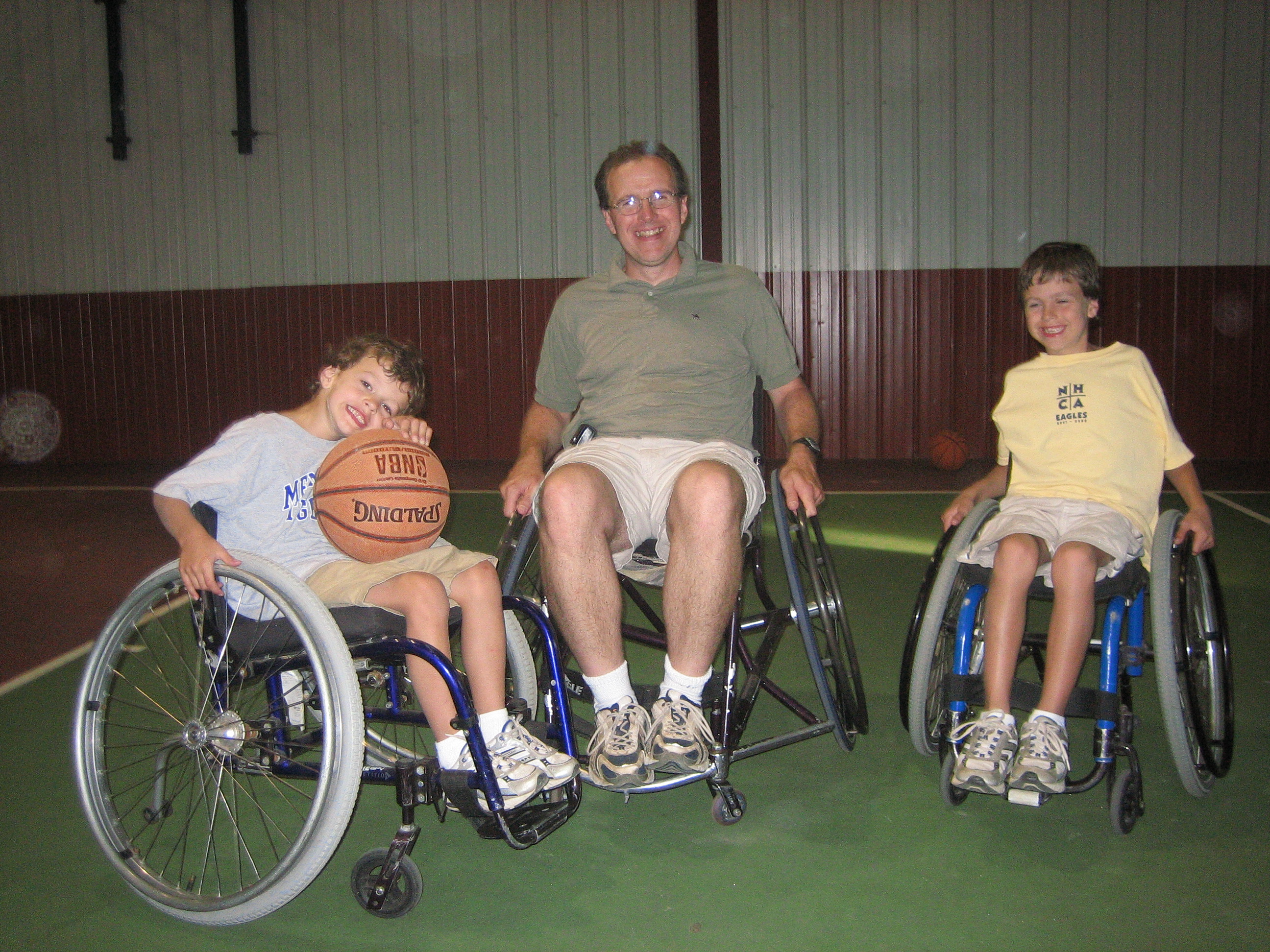
This is one of my favorite pictures with my two non-disabled boys, taken at Joni Camp near Detroit Lakes, MN in 2008.

They LOVED playing on the extra wheelchairs that were brought to camp.  They were completely unafraid to try them out, attempted wheelchair basketball and baseball, and appreciated the skill some of the campers had in using the chairs.

And I thought it was good for them (and for me) to understand how valuable the chairs are for those who need them.  

Why do I bring that up now, as the snow flies in Minnesota?

I was reading a religious denomination’s suggestions for starting a disability ministry, and it included introducing people to wheelchairs – exactly what happened above at Joni Camp for me and my boys.

Yet their suggestions struck me as more likely to cause harm than good.  Tomorrow I’ll share their specific suggestion, and why I thought it worked at Joni Camp but is generally really bad advice.

Do you have a story about how you learned about disability or adaptations in ways that were helpful and positive?

Read Full Post »

I missed this article, “The Abortion Distortion – Just How Pro-choice is America, Really?,” in the New York Magazine, but fortunately Al Mohler didn’t.  He wrote this commentary, An Amazing Article on Abortion in New York Magazine, in response.

Both articles are worth reading. That is no endorsement of the views of the New York Magazine article, but I did learn some things from it.

But please also consider this.  Dr. Mohler rightly points out that technology like ultrasounds has saved babies who otherwise might have been aborted.  Both articles point out that such technologies have turned the argument decidedly in favor of the pro-life movement.  We can see, clearly see, human life is developing in the womb.  That creates a real problem for abortion supporters.

Except, that is, when the baby has a disability.  Then the technologies seem to make the case for abortion.  How else are we to understand abortion rates of 60% to 90% for certain disabilities?

The technologies are not at fault.  We are not as pro-life as we think.

Read Full Post »

In 1964 a woman contracted rubella while pregnant.  Her child was born with significant disabilities.  The parents of that child sued the doctor, alleging both ‘wrongful birth’ and ‘wrongful life’ based on what they alleged was the doctor’s negligence.  In other words, if they had known more, they would have aborted their child and now the doctor needed to pay.

The court rejected the parents’ arguments and concluded:

A court cannot say what defects should prevent an embryo from being allowed life such that denial of the opportunity to terminate the existence of a defective child in embryo can support a cause for action. . . A child need not be perfect to have a worthwhile life. . . . The sanctity of a single human life is the decisive factor in this suit in tort.  Eugenic considerations are not controlling. We are not talking here about the breeding of prize cattle (emphasis mine). . . We firmly believe the right of the child to live is greater than and precludes their right not to endure emotional and financial distress. 

Indeed.

Known as Gleitman v. Cosgrove, it continues to be an influential part of the law, but unfortunately not a decisive part.  Click here for a good description of ‘wrongful birth’ and ‘wrongful life’ court actions, from the Harvard Civil Rights – Civil Liberties Law Review.


Read Full Post »

The World Council of Churches interim statement on disability, written in 2003, might be the longest I’ve seen so far from a religious group. 

There is much here that is commendable.  There is much that is troublesome.

So, to help me when I read things like this, I look for how they deal with sin. 

Generally, the World Council of Churches doesn’t deal with sin very well in their statement.   (more…)

Read Full Post »

Trig Palin has been in the news a lot lately because of his famous mother’s book tour.  That little boy has generated quite a bit of response in his young life.

Lon Jacobs is general counsel for News Corporation and a father of a child with intellectual disabilities.  He describes himself as a pro-choice Democrat in this Wall Street Journal opinion article from last Friday.  He makes some interesting observations about abortion in the United States:

I don’t presume to tell others what to do when they are faced with these difficult decisions. But I worry that women who find themselves pregnant with a child who has a physical or mental disability get only one message, which is all about the burden about to be dumped in their laps. Today, nine out of 10 American women who are told they have a child with Down syndrome choose to abort. I think it’s fair to say that if some of these potential parents had a glimpse of the other side they might have made a different decision.

Americans are said to be starkly divided on the issue of abortion. However, most people I know are somewhere in the middle. There are people who call themselves pro-life but will stand by a daughter who obtains an abortion. Others call themselves pro-choice but applaud the message of the movie “Juno,” where a teenager brings her pregnancy to term so she can give the child to a loving couple.

Unfortunately, there is a another category of people who say they are pro-choice but ought to be characterized as aggressively pro-abortion. These are the people who heap venom and ridicule on Mrs. Palin for bringing Trig into the world. Their views should be troubling to all, especially people who want respect for a woman’s right to choose.

I must admit to being perplexed – how a man who experiences his daughter as a joy and who is afraid of the excesses of the abortion movement can still advocate for abortion, even if he wants it to be rare.  But I do take this encouragement from it: he is not afraid to call out those from his own political party who hate our unborn children with disabilities.

Read Full Post »

The first Sunday of Advent also renews the traditional Bethlehem practice of having children light the advent candle.

It is a tradition I love as fourth-grade boys and girls very seriously carry out this duty.  It is good for children to be given serious duties.

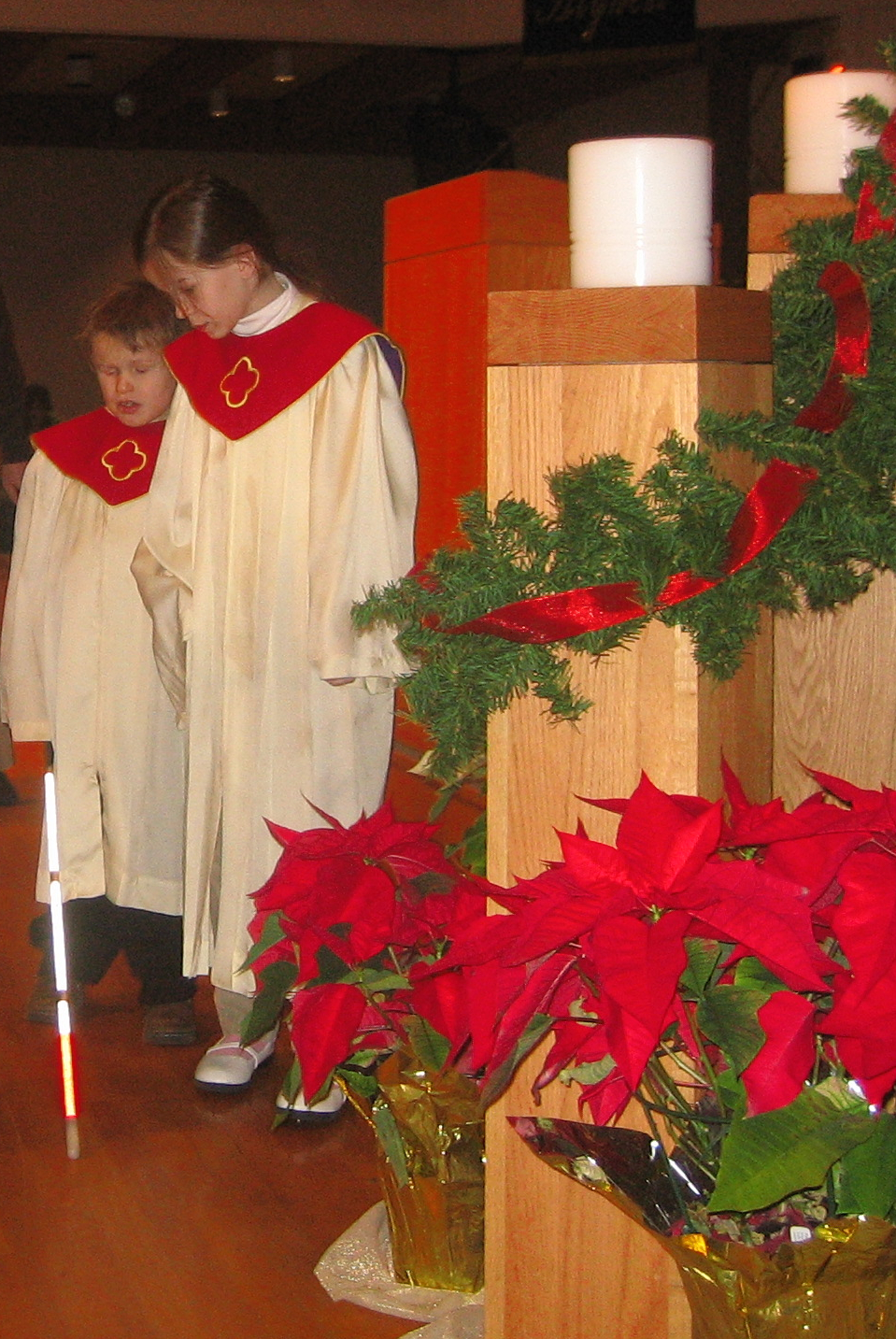
Three years ago the Family Discipleship Department invited a multiply-disabled boy (who happens to be my boy) to participate in this event.  The evening of the lighting, a series of events led to his sister unexpectedly walking with him down the aisle.

It remains one of the precious memories of my life – my boy and my girl walking together down the aisle at my church for Advent.

I know I was not alone in having tears in my eyes!

May God give you a precious, beautiful, memorable Advent memory this year that makes much of God and brings you great joy!

Read Full Post »

R.C. Ryle on True Happiness

Taken from Happiness, by R.C. Ryle (1816-1900):

The true Christian is the only happy man, because he can “sit down quietly and think about his soul. . .” He can think calmly about things to come, and yet not be afraid.

Sickness is painful; death is solemn; the judgment day is an awful thing: but having Christ for him, he has nothing to fear. He can think calmly about the Holy God, whose eyes are on all his ways, and feel, “He is my Father, my reconciled Father in Christ Jesus. I am weak; I am unprofitable: yet in Christ He regards me as His dear child, and is well-pleased.” Oh, what a blessed privilege it is to be able to “think,” and not be afraid!

Read Full Post »

« Newer Posts - Older Posts »