Feeds:
Posts
Comments

Archive for the ‘Book Commentary’ Category

Gregg Harris is well-known in Christian home-schooling circles.  Some credit him with starting the movement.  Today he also known as the father of the Christian leaders and authors, Josh, Alex, and Brett Harris.

But many don’t know that he started out life facing potentially deadly health complications:

Their little boy had three very serious internal birth defects.  For there to be any hope of his survival, he had to undergo three major surgeries within forty-eight hours of his birth.  In 1952 the procedures were dangerous, bordering on experimental.  If he survived, the doctors said, he probably wouldn’t make it past six years old.  And if he did, he would be confined to a wheelchair and need constant care. (Josh Harris, Dug Down Deep, p. 121).

And the impact on his mother?

Caring for him consumed every ounce of her energy, leaving her physically and emotionally exhausted.  Worse of all she was alone in the endeavor.  Grandpa couldn’t handle his son’s disability. . .

The daily stress was almost too much for Grandma to handle.  She contemplated suicide.  “I know that’s wrong,” she told God. And when she thought of little Gregg, she knew she had to keep living, if only for him.  “My life is like a jigsaw puzzle that’s all confused, and I can’t put it together,” she prayed.  “God, only you can fix this.” (Harris, pp. 121-2)

Doctors making pronouncements about the kind of life the child would have. A father who can’t stand to be around his son because of his disability.  A mom living on the edge for years.  A boy who suffers cruelty and embarrassment because of his disability.

Does this sound at all familiar?

This is the kind of child that abortionists would target and proponents of infanticide would say is better to kill – think of all the suffering that could be avoided!  Think of the marriage!  Think of the mom’s mental health!  Deadly, and effective, lies.

To be sure, the suffering is real.  But that is only one part of any story that God is writing.

And today Gregg Harris continues to have influence in the church and has raised boys to adulthood who write helpful books, like Dug Down Deep and Do Hard Things.

Not every story turns out like that, of course.  Our son Paul won’t be writing any books or raising any famous sons.  But God knows exactly why he made Gregg Harris and Paul Knight the way he did, and that is good enough for them to be allowed to live.

Read Full Post »

Revelation 21 has good news for those called by God:

Then I saw a new heaven and a new earth, for the first heaven and the first earth had passed away, and the sea was no more.  And I saw the holy city, new Jerusalem, coming down out of heaven from God, prepared as a bride adorned for her husband.  And I heard a loud voice from the throne saying, “Behold, the dwelling place of God is with man. He will dwell with them, and they will be his people, and God himself will be with them as their God.  He will wipe away every tear from their eyes, and death shall be no more, neither shall there be mourning, nor crying, nor pain anymore, for the former things have passed away.”

And he who was seated on the throne said, “Behold, I am making all things new.” Also he said, “Write this down, for these words are trustworthy and true.”

Not everyone looks forward to being made new.

Dr. Nancy Eiesland, who wrote an influential, frequently-cited book on God and disability, The Disabled God, does not agree that it is good news that all things will be made new.  In an article in Impact, Dr. Eiesland writes about why she hopes she will have her disability in heaven:

As a person with a disability, I could not accept the traditional answers given to my own query of “What is disability?” Since I have a congenital disability, I have had opportunities to hear and experience many of these so-called answers through the years. They included “You are special in God’s eyes, that’s why you were given this painful disability.” Imagine it didn’t seem logical. Or “Don’t worry about your pain and suffering now, in heaven you will be made whole.” Again, having been disabled from birth, I came to believe that in heaven I would be absolutely unknown to myself and perhaps to God. My disability has taught me who I am and who God is. What would it mean to be without this knowledge?

Dr. Eiesland also concluded that God is disabled; that’s a subject for a different post.

I don’t know what our new bodies will be like.  Like most people, I imagine these new bodies will be spectacular.  But the greatest thing isn’t that we will have new bodies.

The greatest thing is we will be in the presence of Jesus without any of our old sin-filled existence dragging on us.  For eternity we will enjoy Jesus purely, without any worry about sinful motives clouding our judgment, drawing our attention away from our Savior, or tempting us to do anything other than what Jesus would have us do, which is enjoy him.

So, I am expecting that none of us, even those who live a disability-free existence in this life, will have any relevant comparison point when we arrive in Jesus’ presence.  Sin has distorted everything in this life:

For the creation waits with eager longing for the revealing of the sons of God. For the creation was subjected to futility, not willingly, but because of him who subjected it, in hope that the creation itself will be set free from its bondage to corruption and obtain the freedom of the glory of the children of God. For we know that the whole creation has been groaning together in the pains of childbirth until now. And not only the creation, but we ourselves, who have the firstfruits of the Spirit, groan inwardly as we wait eagerly for adoption as sons, the redemption of our bodies.  Romans 8:19-23

So, as much as I look forward to knowing my Paul without all his disabilities getting in the way, I really look forward to being free of my sin.  And I take Dr. Eiesland’s perspective as a warning that anything can be used to distort our understanding of the age that is to come.

Our physical bodies here will not determine our eternity.  Only God does that, by the work of Jesus Christ.  And Jesus himself has said, “I am making all things new.”
Read Full Post »

Just the Way I Am has officially gone to its second printing!  The next supply of books should arrive by the end of June.  There are still some you can order now through Desiring God and through Christianbook.com.

Please join me in praising God for his distributing the first printing and making a second printing necessary!

Read Full Post »

We celebrated God’s goodness in giving us Just the Way I Am last Saturday at Bethlehem and Krista was kind enough to provide some remarks which you can hear on this clip:

I was grateful then and now to hear Krista point all of us to God and to his word – a good reminder in where our hope should be!

And I appreciated then and now that all of our children were welcome at this celebration.  You can hear a couple of them in the background while Krista speaks.

Read Full Post »

I’m happy to introduce Carol Steinbach to you as she writes today about the privilege of sharing Just the Way I Am with a young friend.  Thank you, Carol, for this example!  I hope that many of you, as you receive and experience this book, will share your stories as well.

Last night after work I had supper with some very dear friends who have two children, Wellsley (6) and Graham (4). I brought the family a copy of Just the Way I Am.

Before supper the dad sat on the couch and read the book to Wells. As they read through the book, she was surprised and excited — one of the families in the book is in their small group and she recognized pictures of “her friend Andrew!” After her dad finished reading the book to her, she sat with it on her lap, paging through it, reading parts of it to herself. When she was done I heard her comment, “God loves me just the way I am, too.” Later that evening she asked her mom to read the book to her again. Then she brought the book to me and we snuggled down together to look at it.

At the end of the book, after the “Krista’s Story” section, are some discussion questions. Question 3 is, “What can I do to befriend a person with a disability?” Wells and her mom and I talked about it together, and she came up with some ideas: sit next to someone at school, smile, be friendly, don’t stare.

Question 4 is, “What talents and gifts do people with disabilities have?” She didn’t quite grasp it, so we opened the book to the first picture and I asked her, “What is this little girl good at?”

As we went through the book page by page her answers amazed me. “She’s good at spinning.” “They are good at being friends.” “He’s good at smiling.” “They’re good at loving each other.” “He’s good at letting his brother feed him.” “She’s good at laughing.” “He’s good at trusting his daddy.” “He’s good at soccer” (actually wheelchair basketball, but I didn’t correct her). “He’s good at playing.”

On page 25 there is a poignant photo of a young man sitting alone on a broken tree limb. The text on the facing page says, “Even when I am sad and hurting, God is with me.” Wells thought for a bit and said “He’s good at wanting a friend.”

Read Full Post »

I am reading Jeff McNair’s book, The Church and Disability, which is a published collection of his blog postings for disabledChristianity from 2004 through 2008. Though published as a book, the organization of the blog postings gives it a unique, informal style.  After 30 pages in, I think I’m starting to get it.

But when I came to this statement, I almost choked because I have thought the very same thing for readers of The Works of God!

Does it ever occur to you as you read this blog that I am a special education professor (and) not a theologian?  It concerns me if it doesn’t concern you. (McNair, p. 16)

I am not a theologian either.  Nor am I trained in special education or disability studies. I’m just a dad who loves Jesus, because he first loved me.

Part of my reason for reading all these books on disability or disease and the Bible is to find a sound theological work specific to this subject, and from a Reformed perspective.  I haven’t found it yet.   And some of what I have found is awful.  Thus, we started this blog to say more about our good and sovereign God who creates some intentionally to bring glory to his name through disability.

That doesn’t mean there aren’t very helpful resources out there.  Pastor John’s January 24, 2010 sermon, Born Blind for the Glory of God, might be the single most important sermon on the topic I have yet read or heard.  Joni Eareckson Tada has spent decades raising the issue of including people with disabilities in  the life of the church.

But that Genesis to Revelation unpacking of the disability passages, written to demonstrate love for God and his inspired word, the one that tackles Leviticus 21:16-24 in light of Exodus 4:11 and John 9:1-3 and all of Romans 8?  I haven’t found that one yet.

And I am tempted to complain, as Dr. McNair does in ending his post on the subject:

As a result, you have people like me, some better, some worse who are out there trying to make sense of disability from a Christian perspective because those who should be doing the heavy theological lifting are not. (McNair, p. 17)

Yet, I would rather fight that temptation than give in to it.  That’s not a criticism of Dr. McNair at all – he is articulating things I have thought myself.

I have concluded that God somehow gets more glory, at least for now, by having unqualified people like Dr. McNair and me press into the issue of disability and the church and the Bible rather than theologians.  We don’t have the luxury of standing on educational credentials; I expect that people will question what I have written.  I know it makes me more prayerfully dependent and a more careful student of the Bible.  And it makes me much more careful in reading what others have to say about disability and the Bible.

And, someday, if God raises up that trained theologian who looks squarely at this issue, with a desire to illuminate and explain while remaining faithful to the text, having been trained in the original languages, with deep affections for God and a clear understanding of his sovereignty over all things – on that day there will be much rejoicing!

Either way, to God be all the glory, and thankfulness to him that we have access to his word and the help of the Holy Spirit in discerning the truth!

And we have Just the Way I Am, a very helpful, God-centered resource to point us directly to God and to his word on the issue of disability.

Read Full Post »

I found the chapter written by Dr. Dorothy Wertz, “How Parents of Affected Children View Selective Abortion,” from the book, Issues in Reproductive Technology: An Anthology, edited by Helen Holmes.

I now wished I hadn’t.  I am horrified at what she found in her research.

Here is one of Dr. Wertz’s conclusions:

Since individuals rather than governments are making these decisions (selective abortion of children with disabilities), they are not considered eugenic.  Yet, individuals can practice eugenics, perhaps more effectively than governments.  Informal social pressure is a very effective measure of coercion.  Once tests are offered, to reject them is a rejection of modern faith in science and also a rejection of our belief that we should do everything possible for the health of the future child.  To bear, knowingly, a less than perfect child affronts the mores of many social circles.  The sharp reduction in incidents of certain birth defects, such as Tay-Sachs in the United States and spina bifida in Britain, suggests that families are making what amount to eugenic decisions (all bold emphases mine).

There is good news in this.  If individuals are behaving as though there is a sanctioned eugenics movement in the United States, then individuals can be encouraged to make different decisions.

This is where the church and those of us with children with disabilities can engage in loving ways to turn the tide away from eugenics, one couple and one child at a time.

Parents, let us live like our children with disabilities matter and that we trust God to supply all our needs.  There is no reason to minimize our hardships – they are real, and people assume them anyway.  But there is more – God’s promises are real and we have been given a special opportunity to make much of him and testify to his promises through how we live our lives.

People simply do not talk about abortion as an option around me or my son, and I talk all the time about how glad I am to have this boy.  There’s two blows against aborting children with disabilities right there.

For churches, many had pro-life or sanctity of life Sunday services this past January.  Take that extra step – find ways to serve and welcome that family with a disabled family member.  Let all your people know you care about every person who crosses your doors, and that you WANT every one who crosses your doors, as an overflow of your affections for God who has done everything for you.

Will it be hard?  No.  It is impossible.  At Bethlehem we struggle most of the time – some disabilities are really, really hard, we frequently don’t know if we are doing the right things in serving a child or family, we make mistakes that discourage people, we never seem to have enough volunteers, and just when things seem to stabilize, another issue comes up that’s even more complicated than the last.

That is why we anchor everything in prayerful dependence, because only through God’s help will anything happen.

Think – pastor, or elder, or small group leader, or Sunday school teacher, or volunteer, or friend – how will you feel someday if a dad or mom comes up to YOU and says, “because of what I saw in what you did, we chose to have our baby with (terribly difficult disabling condition).”   And what sort of reward will there be from the Father for faithfully serving the most vulnerable of his human creation?

I don’t know.  But I want to find out.

Read Full Post »

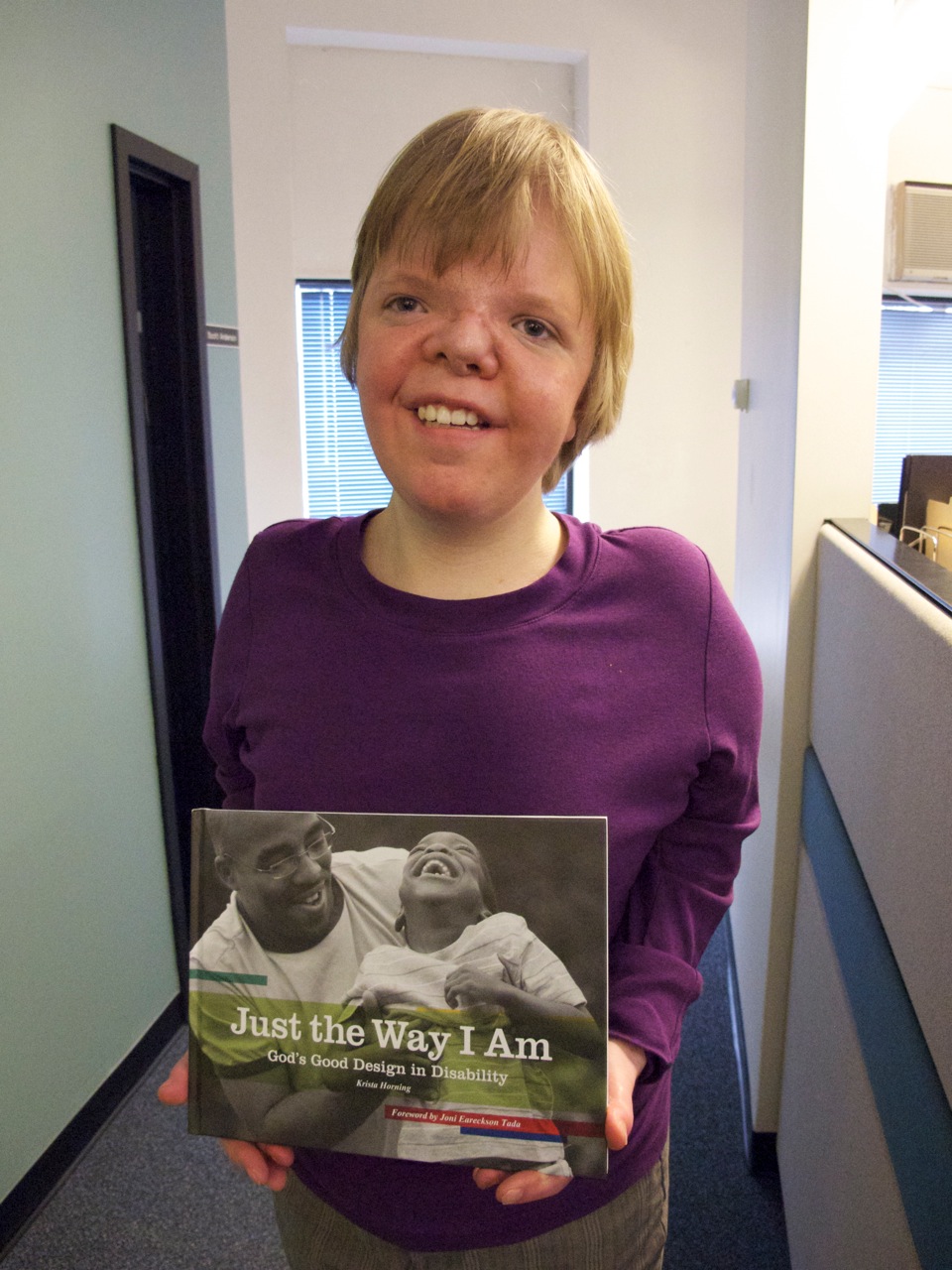
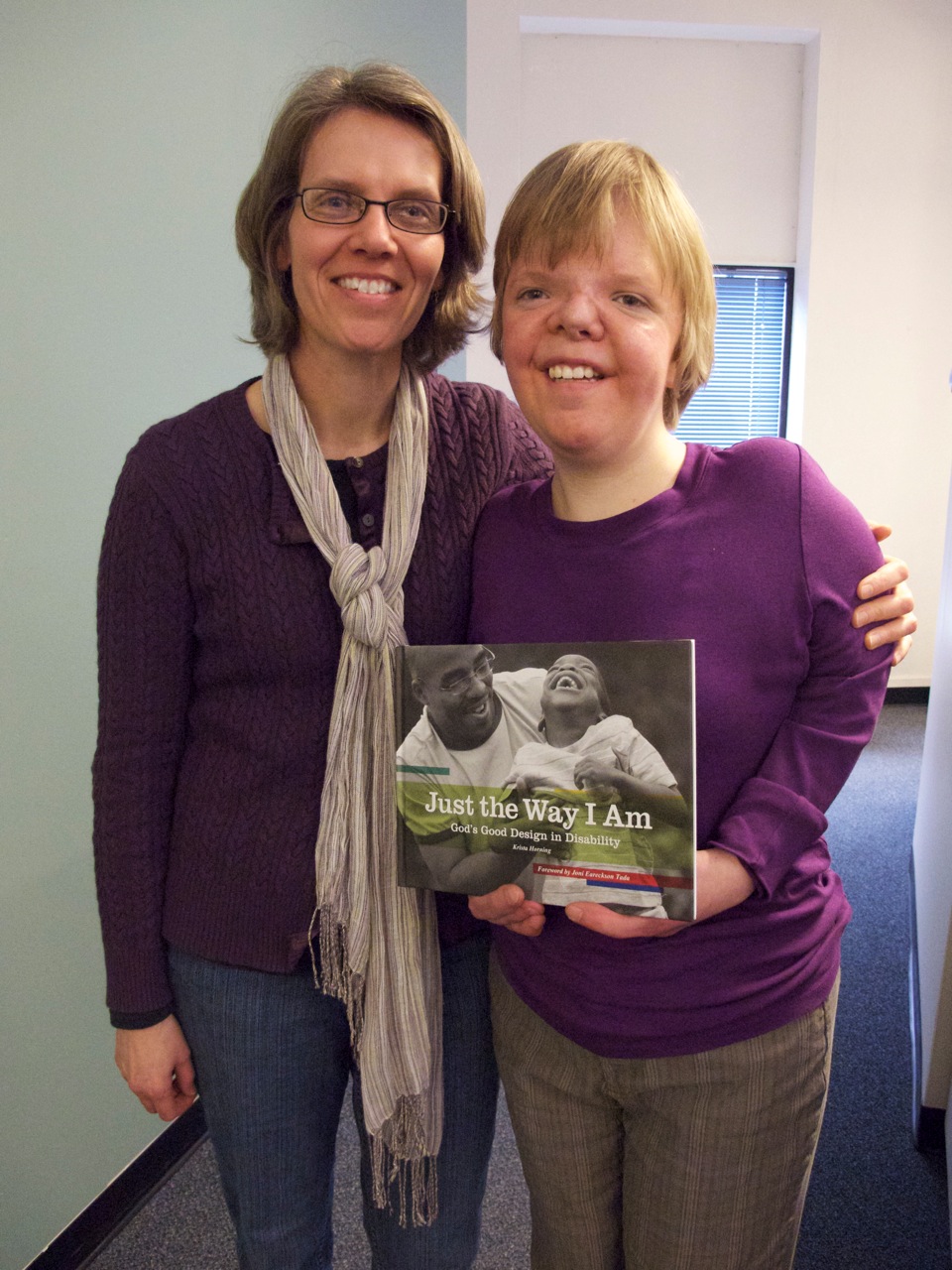
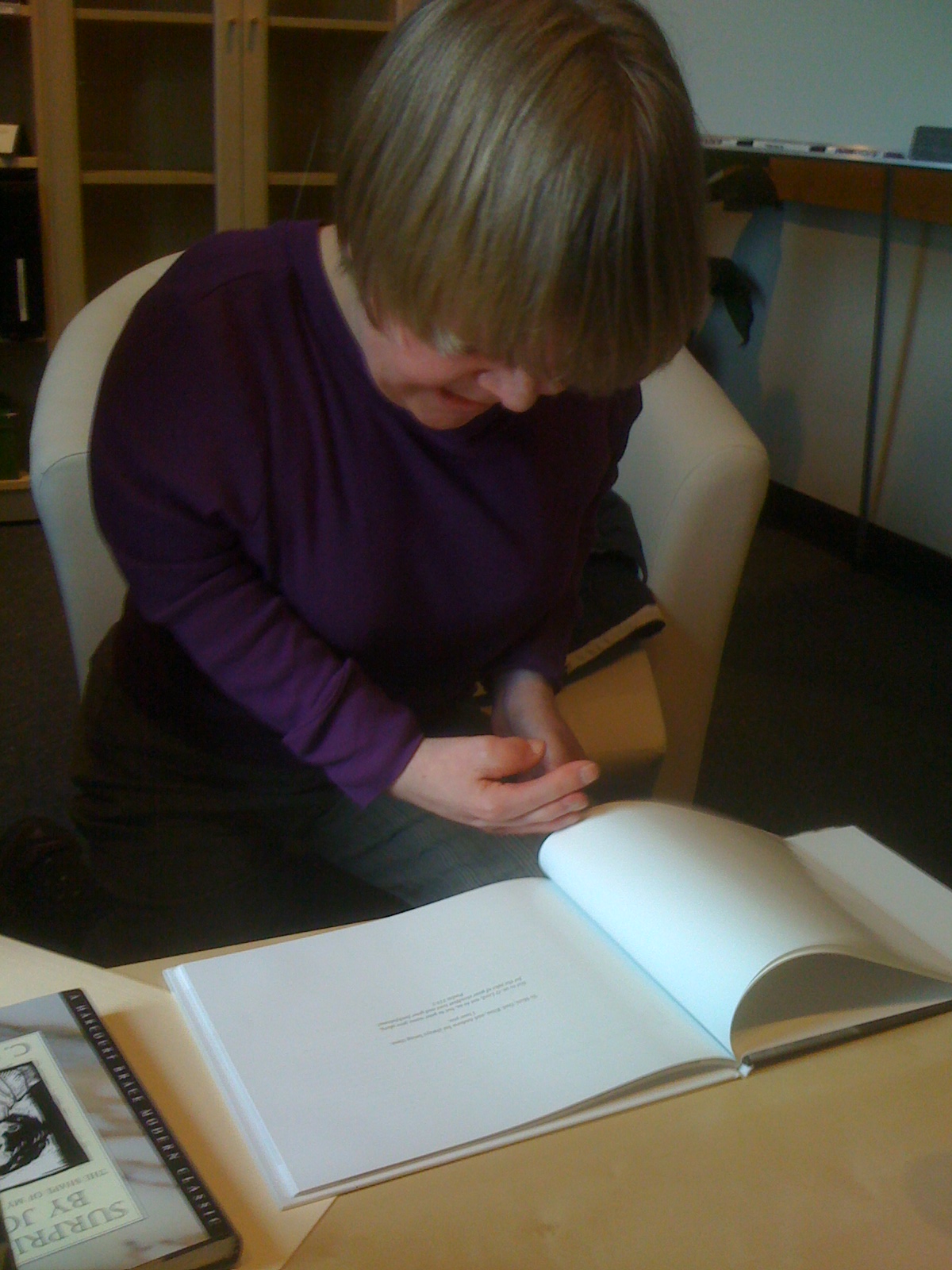
I had the privilege of being with Krista and Mary Horning when a sample of their book arrived.  It was a very sweet moment!

Lord willing, it will arrive for distribution sometime in May!  Please pray – there are so many families and churches who need this message that God is sovereign over all things for the joy of all peoples through Jesus Christ, including disability.

Read Full Post »

Thank you to my wife who pointed me to Kevin DeYoung’s blog posting on Wednesday where he was highlighting the books of Ben Patterson, who wrote the following, which I found really helpful:

Ponder this scene in the throne room of heaven: An angel stands before God holding a golden censer, burning incense that is mixed with the prayers of the saints on earth. These prayers go up before God, and then are mixed with fire from the altar and hurled back down on earth. The amazing result is cataclysm on earth, “peals of thunder, rumblings, flashes of lightning and an earthquake” (Rev. 8:5).

Now picture the saints on earth, huddled in their prayer meetings. If their experience of prayer is anything like mine can be, they may often feel their prayers are barely making it to the ceiling, or are dribbling out and rustling across the floor like dry leaves. Prayer doesn’t frequently bring with it the sensation of cosmic power unleashed, what poet Georg Herbert called “reversed thunder.” But that is exactly what is happening! The whole creation is shaken by the prayers of the saints. Something is happening as they pray. Work is being done, whether they see it or not. Deepening Your Conversation, 24-25

I need encouragements like that!  The unusual daily routines associated with disability in many families can become a grind.  The prayers for strength to face the day can become rote, or feel ineffective. I’m glad the Bible tells us to pray without ceasing (1 Thessalonians 5:17), and pray and not lose heart (Luke 18:1).  And I am grateful for faithful men who point me to the power of God.

Read Full Post »

More books!

Three books on God and disease, disability, or suffering have arrived in the past two days.  I am thrilled! 

Sue Hume, who writes Hope for Special Moms, highly recommended Brokenness: How God Redeems Pain and Suffering, by Lon Solomon. Pastor Solomon is the senior pastor for McLean Bible Church, which has one of the most dynamic and comprehensive disability ministry programs in the United States.

Jeff McNair, writer of the blog disabled Christianity and a professor of special education at California Baptist University, recently published five years of his blog in his book, The Church and Disability.

And the one I am probably most excited to receive is a compilation of 25 readings on the problem of pain, which was recommended by Justin Taylor.  Justin recently interviewed the editor of this compilation, Nancy Guthrie, on the book, Be Still My Soul: Embracing God’s Purpose & Provision in Suffering

I hope to read and comment on each in the coming weeks.

Read Full Post »

« Newer Posts - Older Posts »